1973 International Pancake Race Winner from US Visits Olney: Amazing Event, Wonderful People, Special Place
International Race
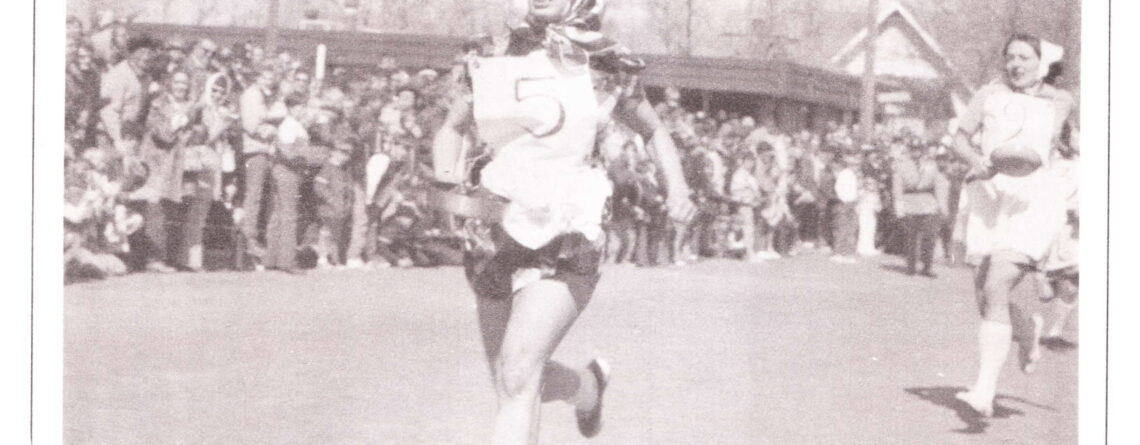
Recently, Pat Clark and husband, Eugene, were delighted and honoured to visit Olney England from their current home in Australia. Fifty-two years ago, Pat participated in and won the International Pancake Race between Olney and Liberal Kansas.
In 1973 Pat was a 20-year-old student and part-time fashion store employee in Liberal. Her husband was teaching at Seward County Community College. Pat’s winning time of 61.2 seconds was then the third fastest recorded time in the race history. (See: http://olneypancakerace.org/race-results/).

Olney’s Pancake Race became an international event in 1950 in response to a challenge from Liberal community leaders who saw press photos of the race and sought to create a similar activity. Olney accepted the challenge and Olney’s 700-year-old tradition became global. When Pat won, she received congratulatory letters and telegrams from across the US as well as some from overseas. She did several radio interviews and even appeared on a national television show, Dinah Shore, along with celebrities including actors Alan Alda from Mash and Ed Asner from the Mary Tyler-More show and renown Country-Western singer, Marty Robbins.
Olney should take great pride in the Pancake Race (http://olneypancakerace.org/) which has become a significant international event. The race takes place every year on Shrove Tuesday, open only to the female residents of Olney who are 18 and over, and resident in the town for at least three months, or who work in Olney.
Liberal’s enthusiasm for the Pancake Race continues to grow. It has established an International Pancake Race Hall of Fame (https://visitliberal.com/international-pancake-day-hall-of-fame/). This includes a Hollywood-like footpath ‘stars’ with the winner’s names featured in ‘circles’ on the pavement. There you will see “Pat Clark 1973.”
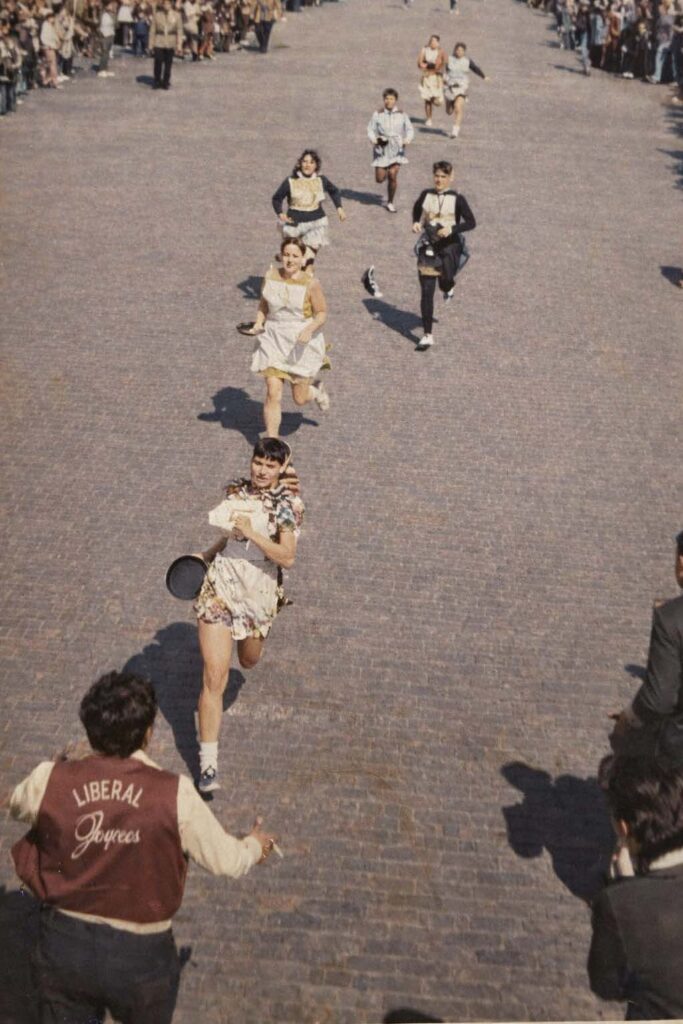
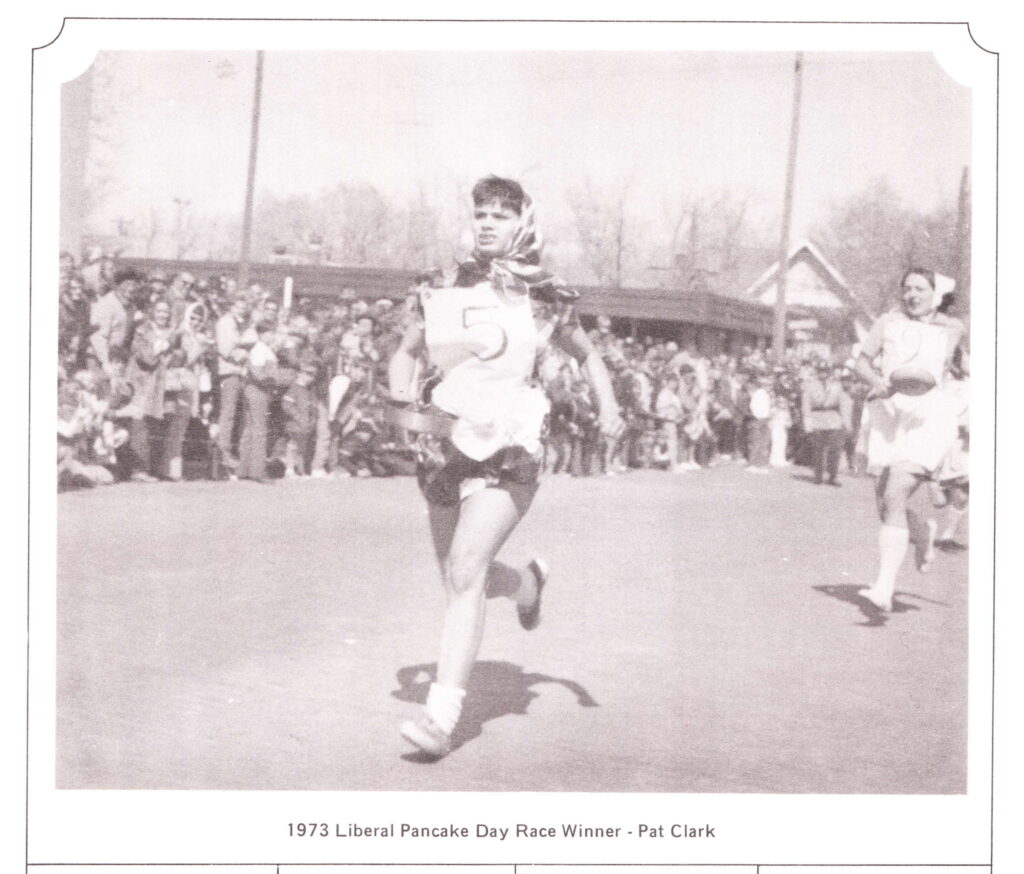
Source: https://visitliberal.com/international-pancake-day-hall-of-fame/
Olney: A Beautiful and Historic Place
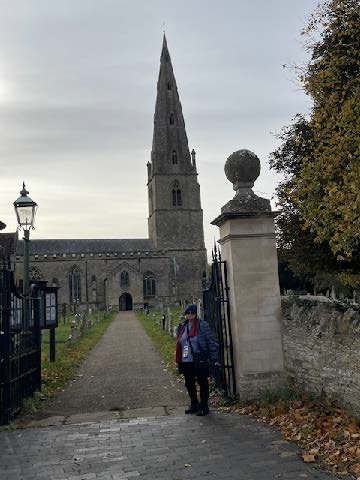
After walking the racecourse and visiting the Parish Church of St Peter and St Paul, the Clarks took the opportunity to visit the Cowper and Newton museum where they met and had a long chat with historians, Geoff and Lyndsay. Pat’s husband was familiar with William Cowper having studied some of his poems in a course on the Romantic Period while undertaking his BA degree in English literature. Cowper was one of the forerunners of the Romantic period in English poetry. Cowper’s poetry was much admired by Benjamin Franklin who wrote highly favourable reviews of Cowper’s work.

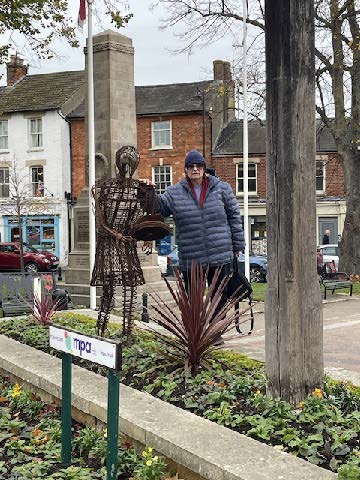
Pat was especially honoured to hold the bell that is used to start the race in Olney. Eugene was particularly impressed with the information on William Cowper and John Burton who crusaded to end the slave trade — something which Olney and the UK should be very proud. And of course, most people would be familiar with the well-known and highly popular and influential Christian hymn — Amazing Grace, written by John Burton. Support of the anti-slavery movement is another connection with the US in that in February 1790, the Pennsylvania Society for the Abolition of Slavery— headed by Benjamin Franklin — submitted an anti-slavery petition to the First US Congress. The Society was the first abolitionist society in the United States, founded by the Quakers in 1775.
Wonderful People
The final aspect that made the visit to Olney so memorable was the many wonderful, kind people they encountered. This included Lyndsay and Geoff at the Cowper Burton museum, kids on the street who pointed out the start of the race, people at the market, restaurant staff and more. At the last train stop before catching the bus to Olney they went to the counter to find out information about where they should catch the bus. As it happened, the person who answered their questions was herself from Olney. Her excitement about meeting Pat was obvious as she said: “If you have any problems with the bus, you can ride home with me.”
While Liberal Kansas lacks the historical pedigree of Olney, the people there share the same welcoming spirit. Indeed, the name “Liberal is derived from the fact that early settler, Seymour S. Rogers, built the first house in what would become Liberal in 1872. Rogers became famous in the region for giving free water to thirsty travellers. Reportedly, Liberal gained its name from the common response to his acts of kindness, “That’s very liberal of you.” (https://en.wikipedia.org/wiki/Liberal,_Kansas)
Conclusion
The International Pancake Race is a testimony to the continuing bonds between the UK and US. After visiting, it echoes Churchill’s observation that we share our history, our values and remain committed to building a “community of language, of law, and literature” (Churchill’s 1943 address at Harvard University).